
Artificial intelligence is changing the way organizations operate.
Every week brings another breakthrough model, another automation platform, or another promise of greater productivity.
Most leadership teams are asking the same question.
How do we help our people adopt AI?
It is an important question.
It just is not the first one.
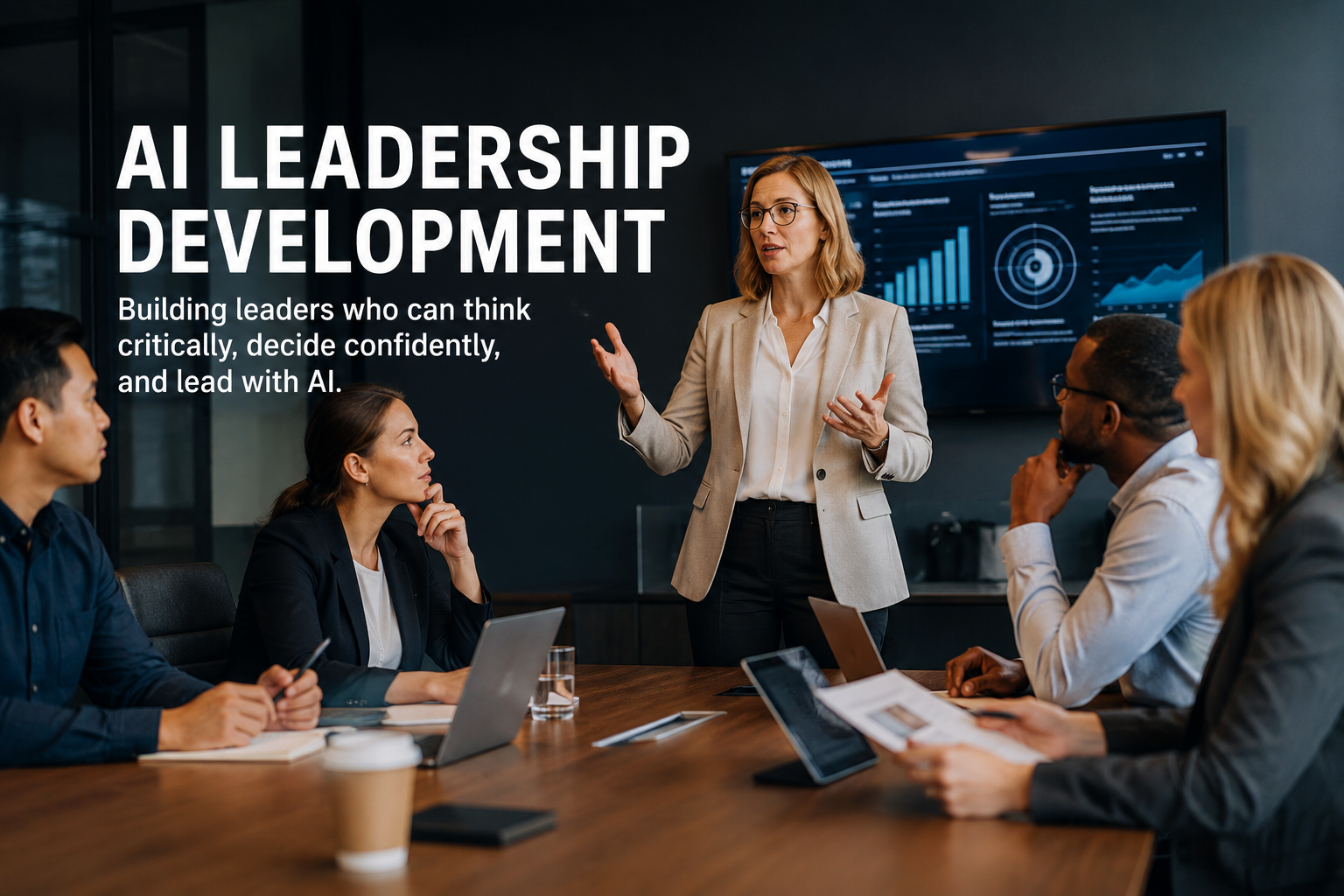
Before organizations can successfully adopt AI, they must develop leaders who know how to lead in an AI enabled environment.
That is a very different challenge.
Technology evolves faster than leadership
Throughout history, technology has changed how work gets done.
Leadership has always determined whether that change succeeds.
The organizations that gain the most from new technology are rarely the ones that buy it first.
They are the ones that adapt how decisions are made, how people collaborate, and how accountability is shared.
AI is no different.
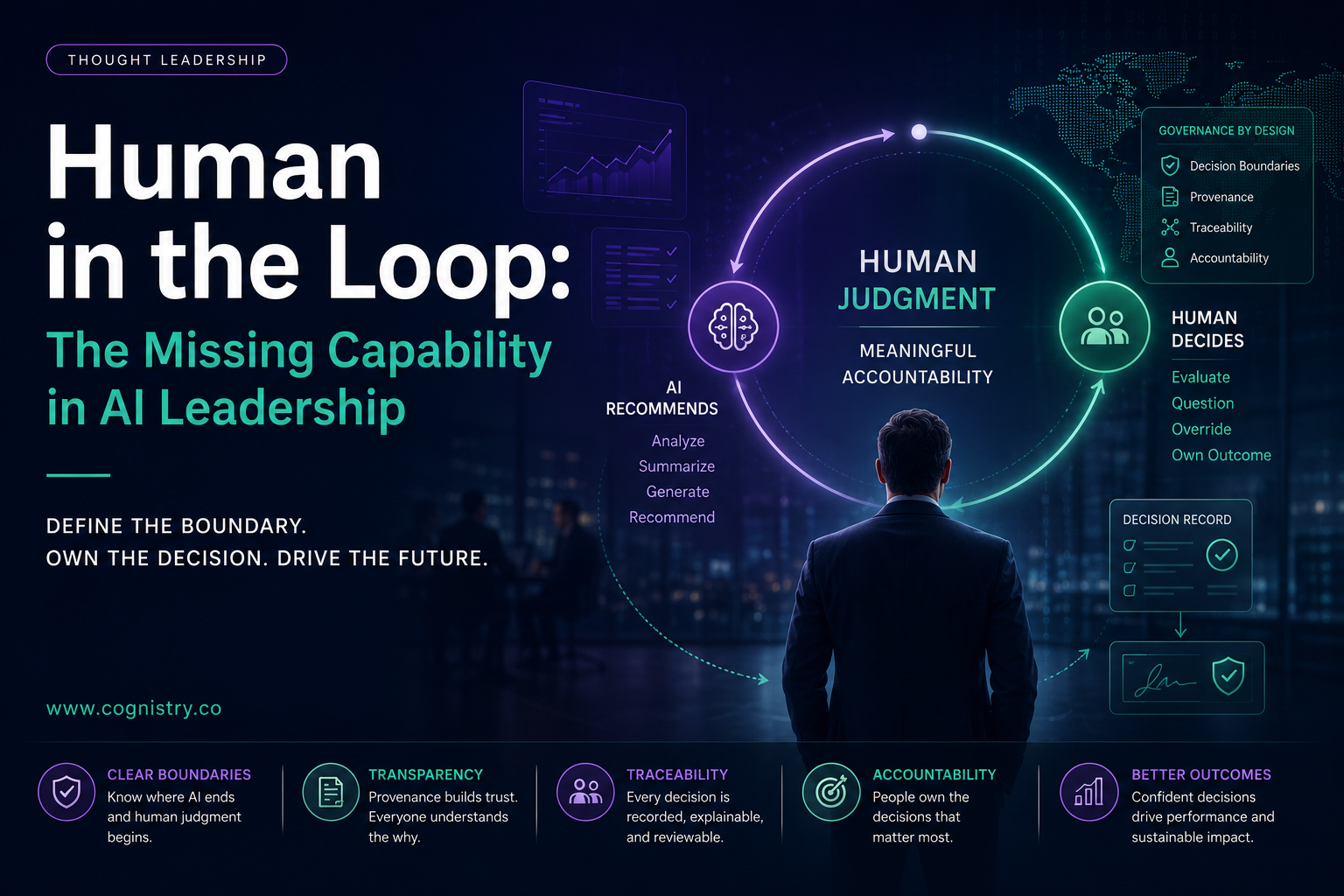
It may automate tasks, summarize information, and recommend actions.
It cannot replace leadership.
In many ways, it makes leadership even more important.
AI increases the demand for judgment
Artificial intelligence gives leaders access to more information than ever before.
Reports arrive faster.
Forecasts become more detailed.
Recommendations appear almost instantly.
On the surface, this looks like progress.
But there is another reality.
More information creates more choices.
More choices create more complexity.
Leaders are expected to make decisions in environments where the pace of change continues to accelerate.
The challenge is no longer finding answers.
The challenge is deciding which answers deserve action.
That is why the AI era is creating a capability challenge, not simply a technology challenge.
Leadership is no longer about having every answer
Traditional leadership often rewarded expertise.
The leader was expected to know more than everyone else.
AI changes that expectation.
Today, every employee can access sophisticated analysis in seconds.
The value of leadership shifts.
It moves from providing answers to creating clarity.
Leaders must ask better questions.
They must evaluate competing recommendations.
They must understand risk before speed.
They must help teams make consistent decisions even when information changes by the hour.
That requires judgment.
Not just knowledge.
AI leadership is about building confidence, not dependence
One of the biggest risks in AI adoption is overreliance.
Teams begin accepting AI recommendations without questioning the assumptions behind them.
That creates new forms of operational risk.
Strong AI leaders encourage something different.
They create environments where AI supports thinking instead of replacing it.
People learn to challenge recommendations.
They compare multiple options.
They understand context before taking action.
AI becomes a trusted partner, not an unquestioned authority.
The hidden barrier to AI transformation
Many organizations believe their biggest obstacle is technology.
In reality, the obstacle is often capability.
New tools arrive.
Processes change.
Policies are updated.
Yet teams continue making decisions the same way they always have.
The result is inconsistent adoption.
Different departments interpret AI differently.
Some embrace it.
Others avoid it.
Many simply use it without a shared understanding of when and how it should influence decisions.
This is where Data Drag begins to appear.
Data Drag is the friction that prevents organizations from turning information, analytics, AI outputs, and expertise into consistent operational decisions. As AI increases the flow of information, leadership capability becomes the factor that determines whether that information creates value.
Leadership development needs a new focus
For decades, leadership development concentrated on communication, strategy, financial management, and people leadership.
Those skills remain essential.
But AI introduces another layer.
Leaders now need to develop decision capability.
They must know when to rely on AI.
When to question it.
When to involve experts.
When human experience outweighs algorithmic confidence.
These capabilities cannot be learned from a single workshop.
They develop through practice, reflection, and repeated exposure to realistic decision making.
Developing leaders for the AI economy
Organizations should begin asking different questions.
Instead of asking whether employees know how to use AI, ask whether leaders know how to lead with AI.
Can they make better decisions?
Can they reduce uncertainty for their teams?
Can they create consistent approaches to evaluating AI generated recommendations?
Can they help people balance speed with responsibility?
These questions matter far more than software proficiency.
Where Cognistry fits
Cognistry was built around the belief that organizations develop lasting performance by strengthening capability, not simply increasing access to information.
Rather than assuming every challenge requires more training, Cognistry helps organizations determine whether learning is the right intervention, design evidence based experiences, support responsible AI adoption, and build measurable capability over time.
The goal is not to teach people how to use another tool.
The goal is to help leaders make better decisions under changing conditions.
The future belongs to capable leaders
Artificial intelligence will continue to improve.
That is almost certain.
What remains uncertain is how organizations will prepare people to lead alongside it.
The companies that outperform in the coming years will not simply invest in better AI.
They will invest in better leadership.
Because in an economy where information is abundant, leadership is defined less by what you know and more by how well you help others decide.
That is the capability every organization now needs to build.