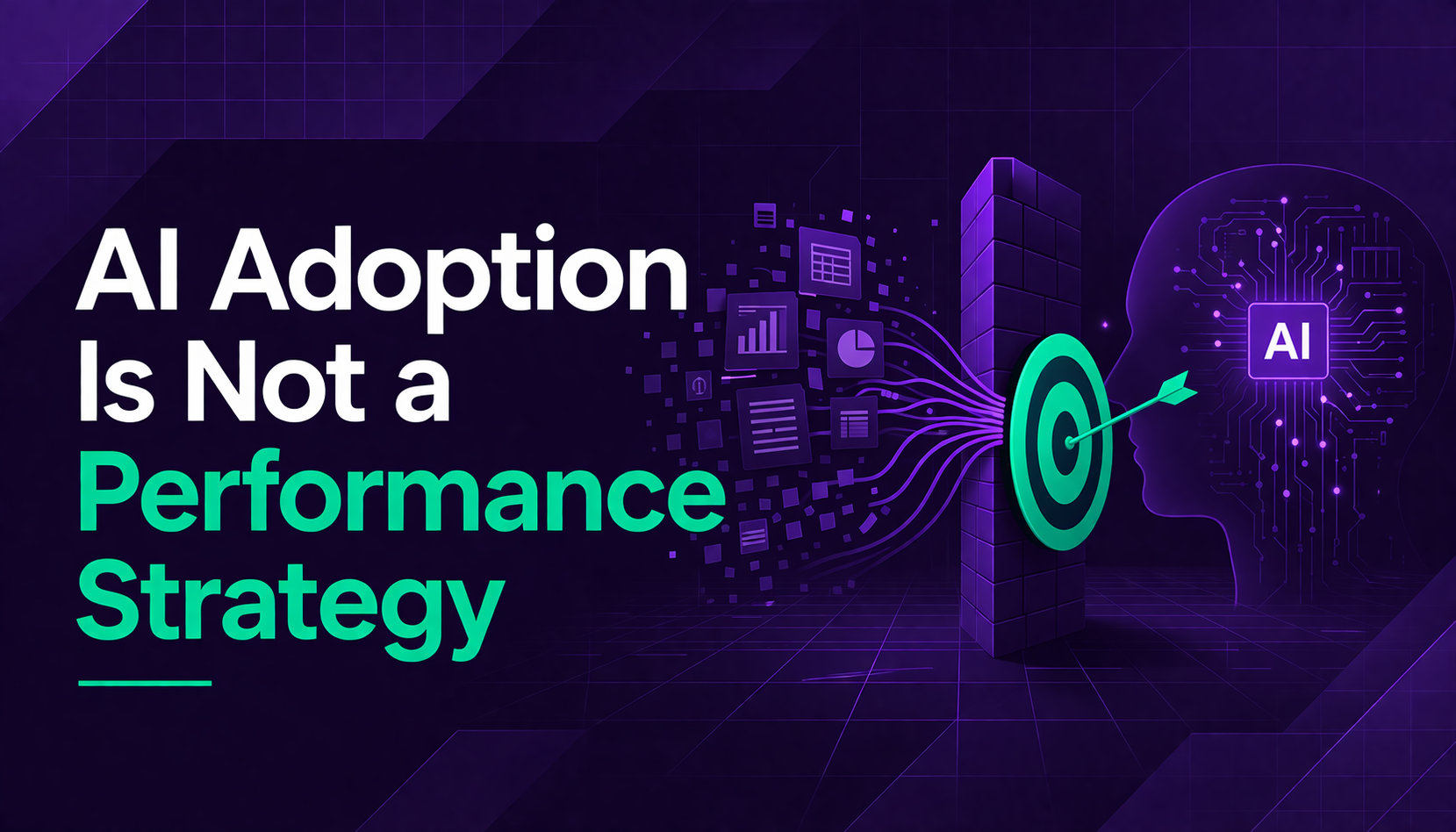

AI-enabled authoring is often framed as a breakthrough in speed and scale. With modern tools, organizations can generate articles, training materials, and strategic documents in minutes. The promise is compelling: faster output, lower cost, and near-instant access to structured knowledge.
But beneath this acceleration lies a more complex question—what happens to creativity, judgment, and originality when machines become co-authors?
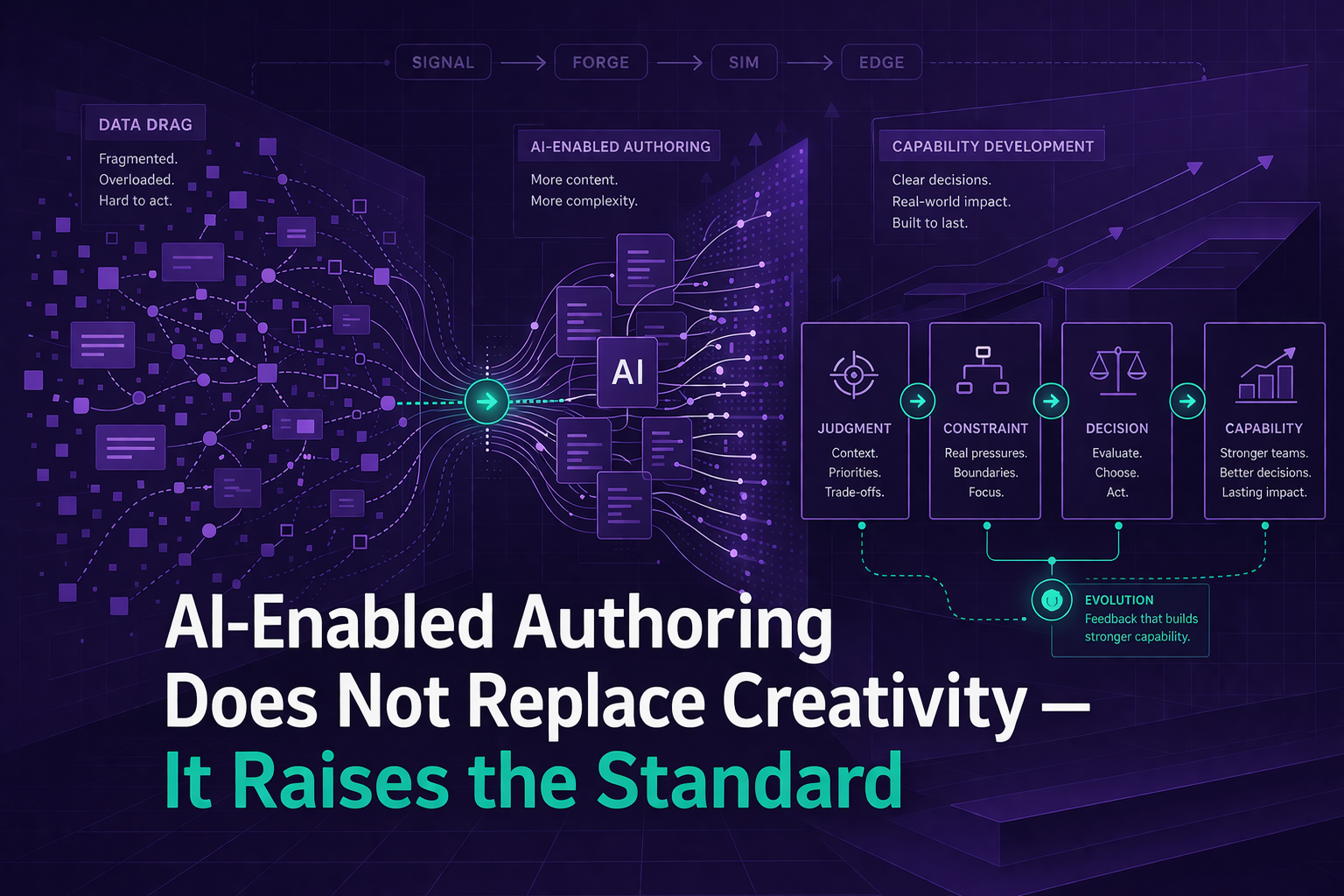
The Real Problem: Data Drag
To understand this shift, it is useful to start with the underlying problem many organizations face: the growing gap between access to information and the ability to use it effectively.
This gap—what we can describe as Data Drag—emerges when teams have abundant data, tools, and AI-generated outputs, but cannot consistently translate those inputs into clear decisions and meaningful action.
AI-enabled authoring appears to reduce Data Drag by making knowledge more accessible. It can synthesize documents, generate drafts, and structure ideas rapidly. In environments where content production has traditionally been slow and resource-intensive, this is a significant advance.
However, the presence of more content does not automatically lead to better thinking.
When AI Amplifies Data Drag
In fact, AI can amplify Data Drag if it encourages passive consumption rather than active judgment.
When outputs are accepted at face value, without interrogation or refinement, organizations risk producing large volumes of content that lack:
- Coherence
- Relevance
- Strategic intent
More content, in this context, becomes noise rather than capability.
The Role of Human Creativity
This is where human creativity becomes essential.
Creativity in AI-enabled authoring is often misunderstood. It is not simply about generating novel ideas or producing polished language. In professional environments, creativity is tightly linked to judgment—the ability to interpret context, prioritize what matters, and shape outputs toward a specific purpose.
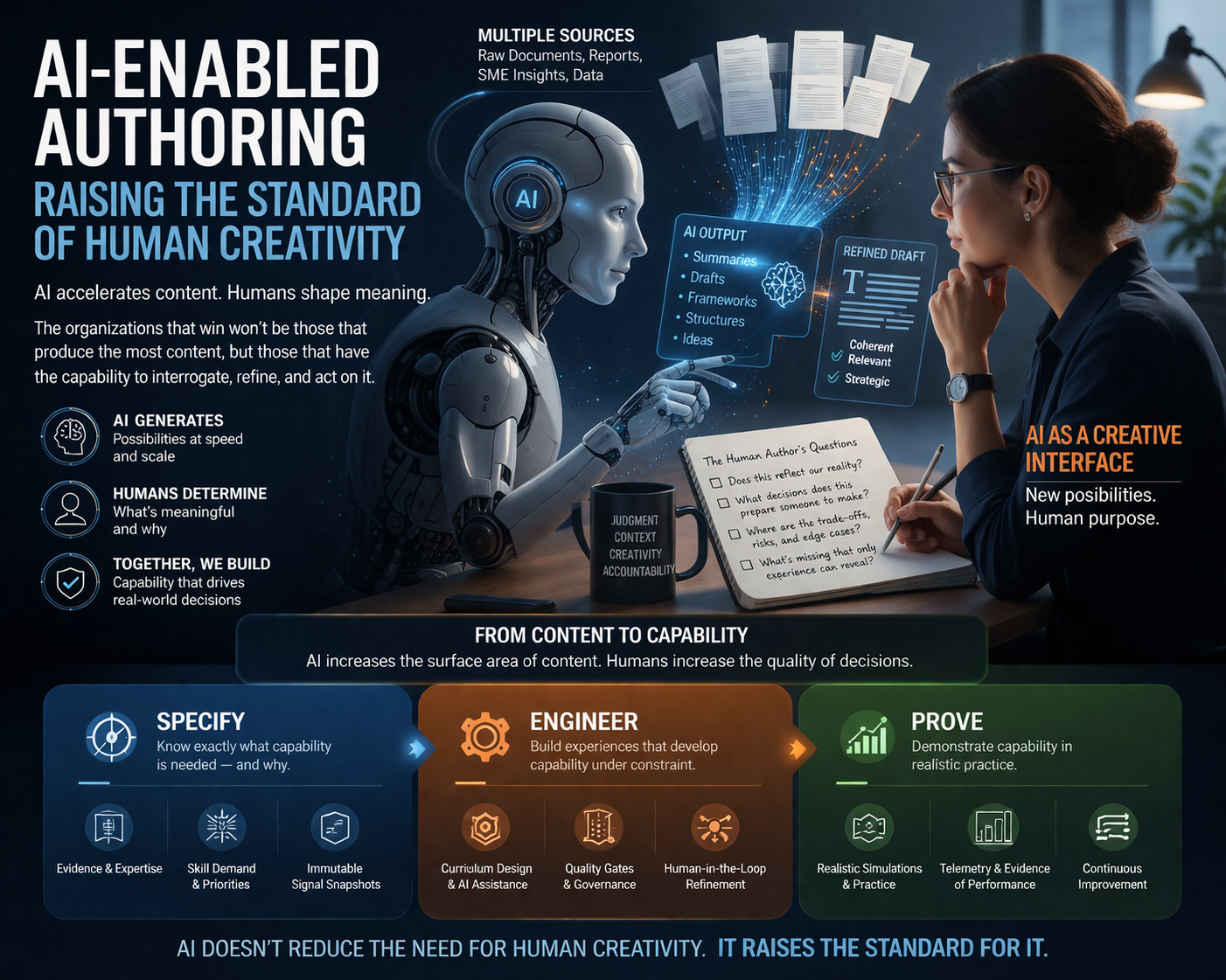
AI can generate possibilities. Humans determine which possibilities are meaningful.
Capability Is Not Content
This distinction becomes critical when we consider how organizations build capability.
Traditional content creation has focused on information transfer—documents, courses, and presentations. AI accelerates this dramatically.
But capability is not built through exposure to information alone.
It is developed through decision-making under constraint.
Human creativity plays a central role in designing those constraints—ensuring that learning experiences reflect real trade-offs, real pressures, and real consequences.
The New Role of the Human Author
When a leader, educator, or operator uses AI to author content, their responsibility is not reduced—it is reframed.
Instead of starting from a blank page, they are shaping, challenging, and refining machine-generated outputs. They are asking:
- Does this reflect the realities of our environment?
- What decisions does this content prepare someone to make?
- Where are the edge cases, risks, and trade-offs?
- What is missing that only experience can reveal?
These questions require lived experience, contextual awareness, and the ability to anticipate consequences. They cannot be answered by AI alone.
AI as a Creative Interface
AI-enabled authoring should not be understood as a replacement for creativity, but as a new interface for it.
Within a capability system, this distinction becomes even more important.
AI can ingest documents, extract signals, and generate initial frameworks. But the system depends on human input to ensure that those frameworks are grounded in real-world decision contexts.
Simulation, Judgment, and Accountability
Consider the design of a simulation.
AI can help construct scenarios, dialogue, and branching logic. However, the credibility of that simulation depends on whether it reflects actual operational complexity.
Only humans can validate:
- Whether trade-offs feel real
- Whether pressures are authentic
- Whether outcomes mirror real-world consequences
This is where creativity intersects with accountability.
Closing Insight
AI increases the surface area of content.
But it does not automatically increase the quality of decisions.
The organizations that benefit most from AI-enabled authoring will not be those that produce the most content, but those that develop the strongest capability to interrogate, refine, and act on it.
In that sense, AI does not reduce the need for human creativity.
It raises the standard for it.