
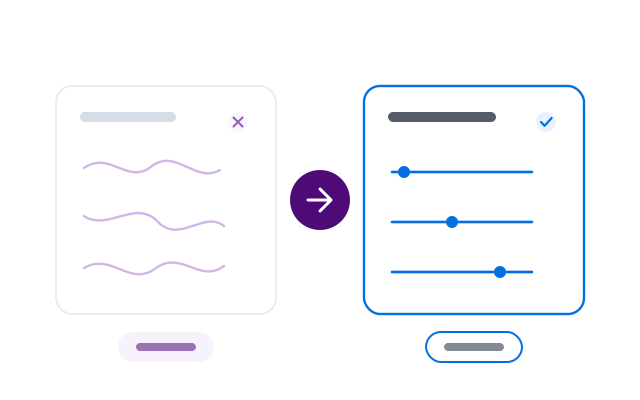
01 — Strategy doesn't fail in the boardroom. It fails in execution.
The plan was sound. The market read was right. And a year later the results look like the old operating model wearing a new name.
The gap between strategy and results is almost never intent — it is capability: whether the people carrying the plan can make the judgment calls it quietly assumes.
The next fourteen rows are the system for closing that gap, end to end.
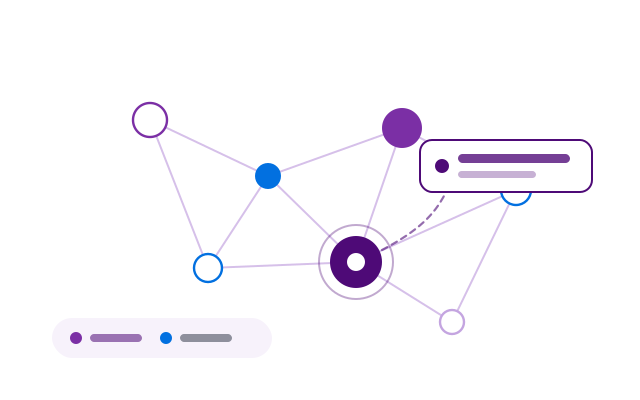
02 — Signal · See what your organization actually knows
What you get: a living map of the expertise inside your organization — the themes, skills, and decision patterns that actually drive your operation.
Signal ingests what you already have: playbooks, procedures, incident logs, operating reviews. No surveys, no self-reported skills matrices. The map is built from evidence of how work really happens.
For a strategy leader, this is the missing first artifact: a defensible picture of current capability before you commit to what comes next.
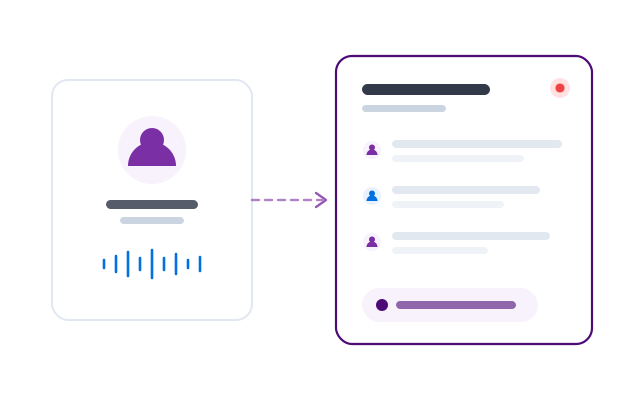
03 — Signal · Capture expert judgment before it walks out the door
What you get: the judgment of your best operators, captured and structured while they are still in the building.
Signal interviews your experts and converts what they know — the calls they make, the signals they watch, the traps they avoid — into attributed, reusable intelligence.
Succession risk becomes a managed asset. When your top performer leaves, their judgment doesn't leave with them.
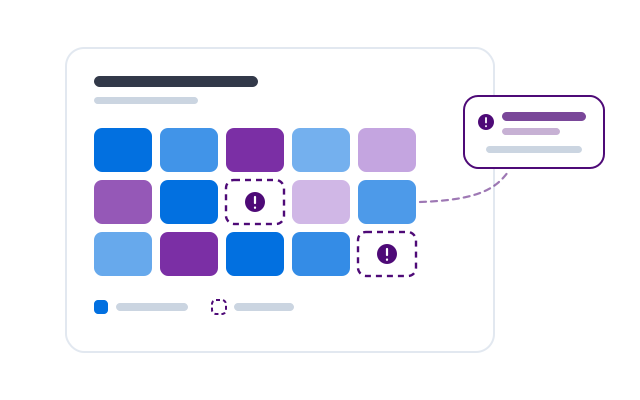
04 — Signal · Know exactly where capability breaks down
What you get: a coverage map that shows, cell by cell, where your strategy is exposed — which teams, which decisions, which skills.
Signal scores every theme by strength of evidence and flags the gaps against what your strategy demands. Not a generic skills audit — a targeted register of where execution will fail first.
Investment decisions stop being a matter of who asked loudest. You fund the gaps the evidence flags.
05 — Forge · Turn tacit expertise into structured development
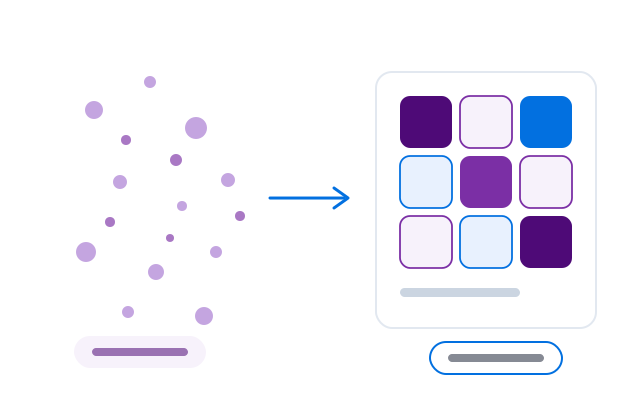
What you get: development built from your own captured expertise — not licensed from a catalog that has never seen your business.
Forge takes the sealed output of Signal and structures it into skills, decision frameworks, and role-calibrated paths. The scattered knowledge of your organization becomes an explicit architecture people can actually learn from.
Generic content teaches your competitors' playbook. Forge teaches yours.
06 — Forge · Assemble programs in days, not quarters
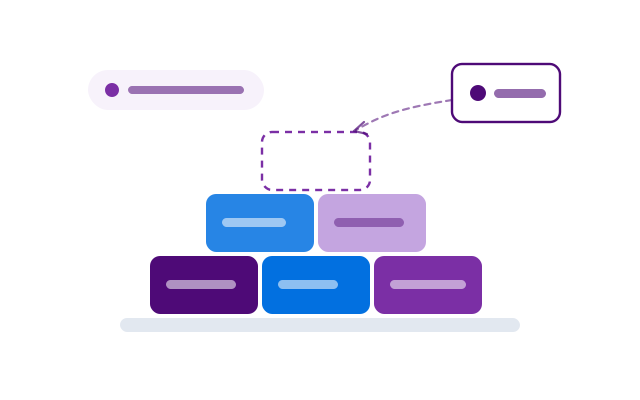
What you get: complete, role-ready programs scaffolded directly from the Signal Snapshot — while the strategy that demanded them is still current.
Because the capability demand is already structured, Forge composes programs from building blocks instead of authoring from a blank page. What took a curriculum team two quarters takes days.
Speed matters strategically: capability arrives while the window is still open.
07 — Forge · Aim every learning path at proven demand
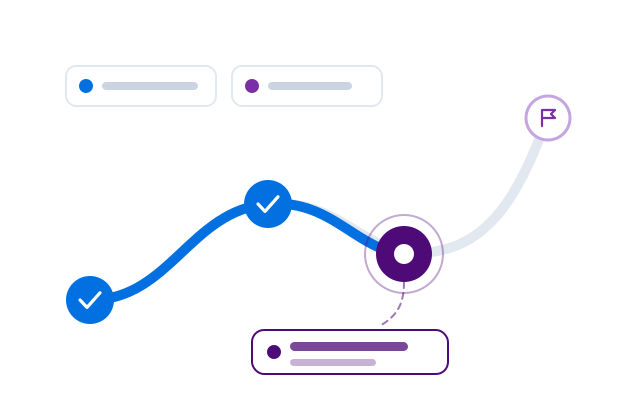
What you get: per-role paths where every step traces back to evidence — this skill, for this role, because the operating record demands it.
No filler modules, no compliance-shaped padding. Each path is calibrated to the person's role, exposure, and the decisions they will actually face.
When the CFO asks why the program exists, the answer is a traceable line from strategy to gap to path. Development you can defend line by line.
08 — Sim · Rehearse the conversations that decide outcomes
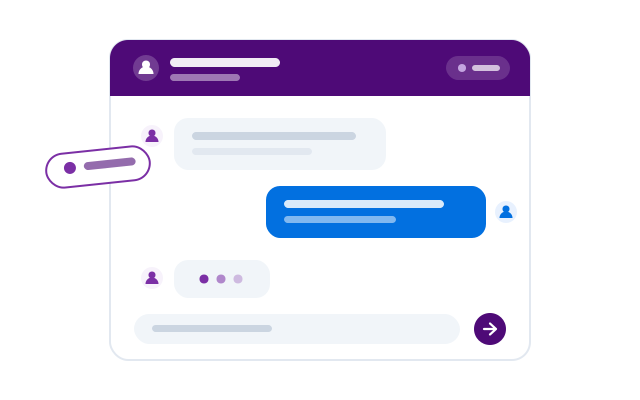
What you get: a practice environment where your people run the critical conversations — the renewal save, the pricing push-back, the incident escalation — against realistic AI counterparts, before the real one happens.
Sim builds its scenarios from your captured expertise, so the customer objections and operational pressure are yours, not a vendor's script.
The first time your team faces the hard conversation, it's their fifth time having it.
09 — Sim · Practice decisions under realistic pressure
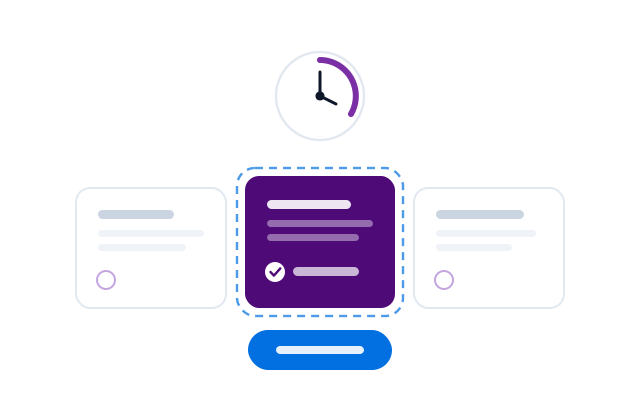
What you get: judgment rehearsed under the conditions that actually break it — time pressure, incomplete information, competing priorities.
Sim scenarios branch on the choices people make, so a weak decision plays out to its consequence instead of being marked wrong in a quiz. Professionals feel the cost of poor judgment where it's cheap.
Mistakes migrate from your P&L to the simulator, which is where you want them.
10 — Sim · Feedback that changes judgment, not just scores
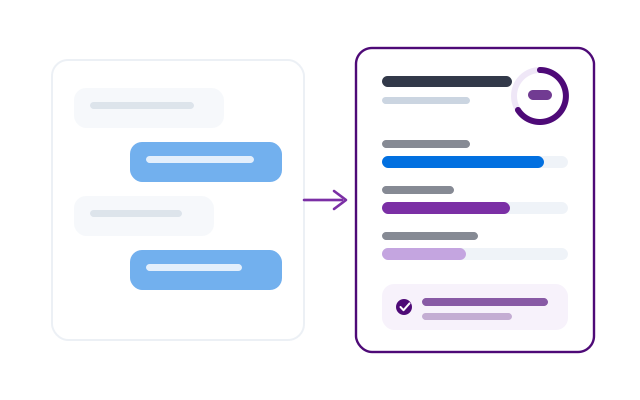
What you get: a scored read-out on every rehearsal — decision quality, reasoning, execution — with targeted coaching on the exact moment judgment slipped.
Because scoring is dimensional rather than pass/fail, managers see which part of judgment needs work per person, and coaching stops being generic.
Practice compounds: each cycle sharper than the last, on the record.
11 — Edge · Capability switched on in live work
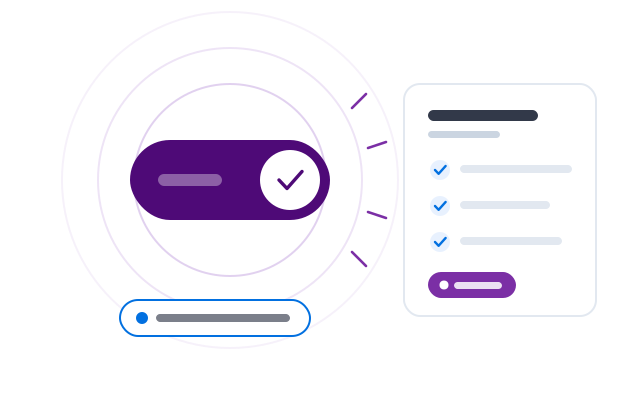
What you get: the bridge most programs never build — rehearsed judgment carried into live execution, with support at the moment of use.
Edge activates capability where the work happens: in the deal, the case, the operational call. Development stops being an event people attended and becomes behavior they run.
This is the row where “training” ends and performance begins.
12 — Edge · Performance you can watch climb
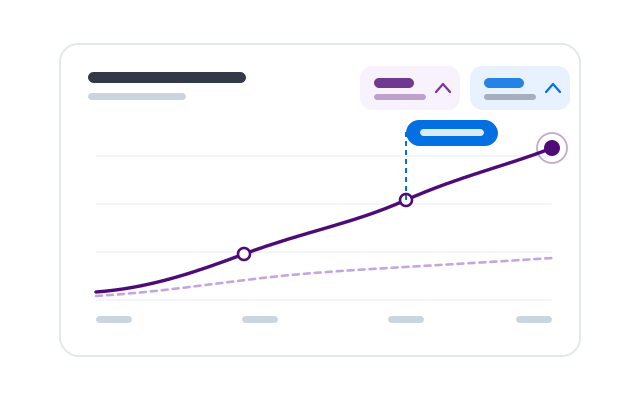
What you get: a live view of capability against baseline — decision quality, execution consistency, and the operational outcomes they produce.
Edge measures performance in real work, so the trend line on this dashboard is the strategy landing, week by week. Not learning metrics. Business metrics.
The quarterly update writes itself: here is where judgment improved, and here is what it did to the numbers.
13 — Edge · Roll out team by team, with proof at each step
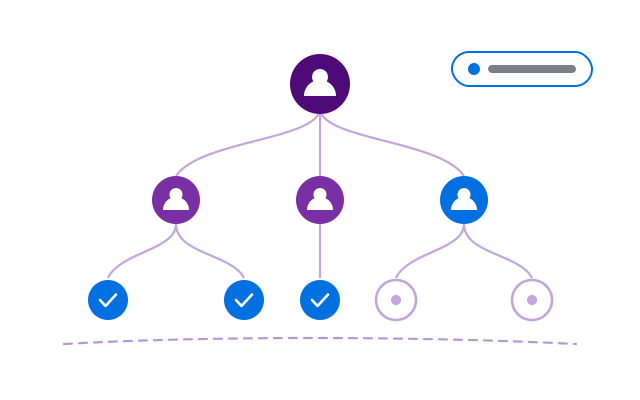
What you get: a rollout you can govern — each team activated, measured, and proven before the next wave starts.
Because Edge produces performance evidence per team, expansion decisions ride on results, not optimism. Teams that lag get targeted support; teams that lead become the template.
Transformation stops being a launch event and becomes a sequence of proven steps.
14 — The loop closes, and improvement compounds
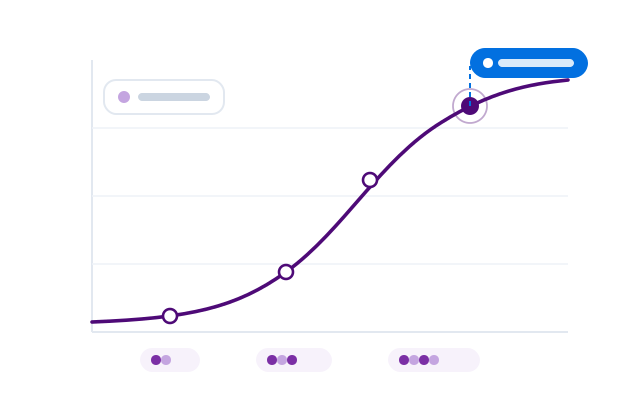
What you get: a system, not a program. The gaps Edge discovers in live execution flow back to Signal as new capability demand — and the whole pipeline runs again, sharper.
Signal → Forge → Sim → Edge → Signal. Each cycle starts from better evidence than the last, which is why the curve bends upward instead of flattening after launch.
One-off training decays. This compounds.
15 — Outcomes on the board
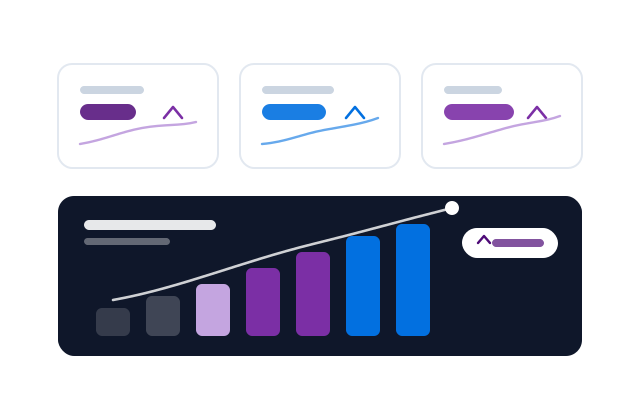
What you get, end to end: a defensible line from captured expertise to business results — every program traceable to evidence, every improvement measured in live work.
When the board asks what the capability investment returned, you don't bring completion rates. You bring the operating record: judgment captured, built, rehearsed, and proven — with the performance trend to show for it.
That is the end-to-end value story. The next step is running it on your own operation.